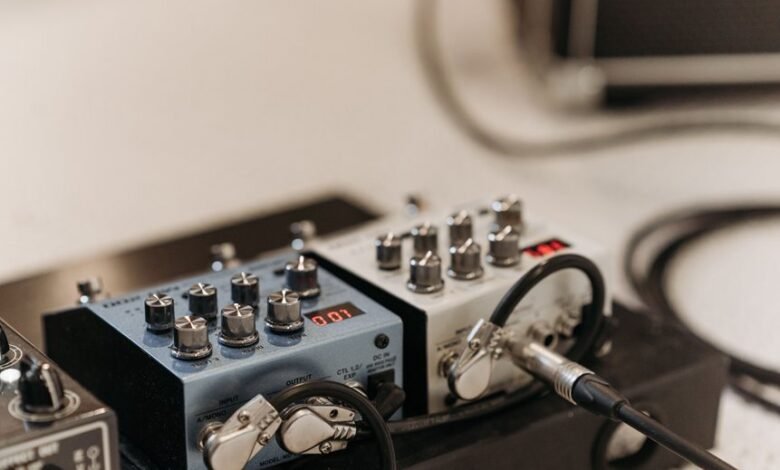
The guide examines how USB-to-1/4″ interfaces translate guitar signals into digital data for Rocksmith-like software, focusing on latency, jitter, and driver stability. It covers cables, adapters, and DACs, emphasizing USB class compliance and shielded 24-bit paths. Platform differences among PC, Mac, and consoles are laid out with a practical setup framework. A clear decision framework emerges, but subtle trade-offs persist—compatibility, tone accuracy, and long-term viability demand careful evaluation before committing to a substitute.
What the Real Tone Cable Does and Why You Might Look for an Alternative
The Real Tone Cable is a USB-to-1/4″ interface that converts guitar signal into a digital format for Rocksmith and similar software, enabling real-time audio processing and gameplay integration. It performs USB audio routing with low-latency buffering, ensuring responsive play.
Alternative latency considerations reveal trade-offs between stability and precision, while USB audio constraints shape compatibility, driver support, and cross-platform use possibilities.
Cables, Adapters, and Interfaces: Practical Options to Replicate Rock-Solid Latency
To achieve rock-solid latency outside the official Real Tone Cable, practitioners evaluate a spectrum of cables, adapters, and audio interfaces by latency, jitter, driver stability, and USB class compatibility.
Cable latency considerations focus on shielded 24-bit paths and USB audio class compliance, while DAC compatibility matters for accurate conversion and minimal mismatch between guitar signal and digital data, ensuring low-latency monitoring.
Platforms, Compatibility, and Setup: PC, Mac, and Consoles Without the Official Cable
Platforms, compatibility, and setup for PC, Mac, and consoles without the official Rocksmith Real Tone Cable demand careful alignment of software, drivers, and hardware signals to ensure stable operation.
Alternative latency, USB issues, and compatibility concerns arise, with setup tradeoffs requiring precise driver configuration, input device selection, and firmware updates to minimize jitter while preserving playable feel and broad platform support.
Pros, Cons, and a Quick Decision Framework: Pick the Best Substitute for Your Setup
Are substitutes truly viable, and how do their tradeoffs stack up for different setups?
The analysis weighs pros and cons of each substitute, balancing latency, compatibility, and tone accuracy.
A quick decision framework guides choices by budget, platform, and desired guitar tone.
Pros and cons are distilled, enabling precise selection; freedom-focused users optimize practicality over hype.
Frequently Asked Questions
Can I Use Bluetooth Adapters as a Rocksmith Real Tone Substitute?
Bluetooth adapters are not ideal substitutes; reliability varies. The system experiences drone buffering and latency troubleshooting challenges, with potential USB HID compatibility limits. A grounded approach favors wired links or official adapters for stable Rocksmith performance and freedom-driven setup.
Do Any Substitutes Support Microphone Inputs for Real-Time Singing?
Yes, some substitutes offer mic compatibility for real-time singing, but tone input quality varies; most rely on line-level or instrument input. Prospective setups should verify mic compatibility, latency, and driver support for stable performance.
Will Android or iOS Devices Work as a Real Tone Alternative?
Android devices and iOS devices can act as Real Tone alternatives, depending on apps and DAC compatibility. An anecdote: a guitarist reports success using affordable USB–OTG adapters, yielding low latency, solid melodic response, and portable practice freedom.
How Does Latency Differ Between USB Audio Interfaces Brands?
Latency varies by brand, with measured differences evident in latency testing and interface benchmarks. Some USB audio interfaces achieve sub-5 ms round trips, while others exceed 10 ms. The variability reflects drivers, buffer settings, and clock stability.
Are There Reliable DIY Methods to Mimic Real Tone Signals?
DIY Signal Mimics offer limited reliability; however, some builders claim usable results. Modern USB Interfaces reduce latency, while Guitar Cab Sims vary. Wireless Latency remains a challenge, and DIY methods may not consistently emulate authentic tones.
Conclusion
In sum, substitutes can match Rocksmith Real Tone Cable performance with careful component choice and setup discipline. Yet the field remains a trade-off landscape: speed vs. stability, analog nuance vs. digital cleanliness, budget vs. long-term compatibility. The decisive edge often goes to a shielded, 24-bit interface behind a compliant driver stack, with empirical testing across platforms. Audience beware: latency is unforgiving; compatibility is king. Ultimately, the best substitute reveals itself through measured wins in latency, tone fidelity, and reliability.